
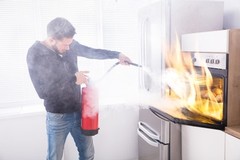
When a fire extinguisher discharges, it does exactly what it is designed to do: it stops a fire fast and protects people and property from something far worse. What many homeowners and business owners do not expect is the mess that follows. The fine powder and chemical residue left behind can spread into every corner of a room, and that aftermath is what we call fire extinguisher damage. If you have recently used an extinguisher and are now staring at a thick layer of yellow or white dust across your floors, furniture, and electronics, you are not alone, and professional help is available from restoration contractors in Lansing.
At McCardel Restoration, we often respond to situations where the fire itself was small or contained, yet the cleanup is surprisingly involved. Understanding what the residue is, why it matters, and how it should be removed can help you make smart decisions and avoid costly mistakes in the hours and days after an incident.
What Fire Extinguishers Leave Behind
Most household and commercial extinguishers fall into a few common types, and each leaves a different kind of residue. Dry chemical extinguishers, the most widely used, discharge a fine powder made of monoammonium phosphate or sodium bicarbonate. This powder is excellent at smothering flames, but it is also mildly corrosive and acidic, especially when it comes into contact with moisture. Clean extinguishers, often found in kitchens and server rooms, use a wet chemical or gaseous agent that leaves less visible mess but can still require attention.
The powder itself is extremely fine, almost like flour, which means it travels. Air currents, HVAC systems, and even foot traffic can carry it from one room into others that were never near the fire. That is why fire extinguisher damage frequently extends well beyond the area where the extinguisher was actually used. Within hours, that residue can begin to settle into fabric fibers, electronic vents, and the small gaps around countertops and cabinetry.
Why Fast Cleanup Matters
The urgency with fire extinguisher residue comes down to its corrosive nature. The dry chemical powder can begin to damage metal surfaces, appliances, and sensitive electronics within a short period. Circuit boards, computers, kitchen appliances, and HVAC components are especially vulnerable because the acidic residue reacts with metal contacts and causes corrosion that may not be obvious right away.
Beyond the physical damage, there is also an air quality concern. The powder becomes airborne easily, and breathing it in can irritate the eyes, throat, and lungs. People with asthma or other respiratory sensitivities are particularly affected. For these reasons, we strongly recommend ventilating the area, avoiding the temptation to simply wipe everything down with a wet cloth, and reaching out to professionals who can handle the residue safely. Prompt attention is one of the main reasons our emergency restoration services exist, so that minor incidents do not turn into expensive, lasting problems.
Common Mistakes Homeowners Make
The instinct after discharging an extinguisher is to grab paper towels and start scrubbing. Unfortunately, several well-meaning cleanup attempts can actually make fire extinguisher damage worse. Wiping dry powder with a damp rag can turn it into a sticky paste that smears and bonds to surfaces. Using a standard household vacuum can blow the fine particles right back into the air and spread them throughout the home. Powering on electronics coated in residue can accelerate corrosion and lead to permanent failure.
A more careful approach involves gently removing loose powder before any liquid is introduced, neutralizing the acidic residue with the correct cleaning agents, and protecting items that have not yet been contaminated. These are the steps our teams follow, and getting them right the first time usually saves time, money, and property.
The Professional Cleanup Process
When our crews arrive at a property dealing with fire extinguisher damage, we begin with an assessment to understand how far the residue has traveled and which materials and belongings are affected. From there, the cleanup generally follows a clear sequence designed to protect both your property and your health.
- Containment and ventilation to prevent the powder from spreading further while improving air quality.
- Dry removal of loose residue using specialized vacuums with fine particulate filtration rather than ordinary equipment.
- Neutralizing and cleaning surfaces with agents chosen for the specific type of extinguisher chemical involved.
- Detailed attention to electronics, appliances, and HVAC systems, which often need to be opened, inspected, and treated carefully.
- Deodorizing and final air treatment to remove lingering chemical odors and fine particulate.
Many belongings that look ruined can actually be saved with the right techniques. Furniture, documents, clothing, and sentimental items often respond well to professional treatment, which is why our contents restoration services in Lansing and the nearby communities are such an important part of the recovery process. Restoring what can be saved is almost always more affordable and more meaningful than replacing everything.
When Fire Extinguisher Damage Comes With Fire and Smoke
In some cases, the extinguisher was used on a fire that caused additional smoke and heat damage. When that happens, the cleanup becomes more layered because smoke residue, soot, and odor need to be addressed alongside the chemical powder. Smoke particles penetrate porous materials and settle into walls, ceilings, and ductwork, and they require a different set of techniques than extinguisher residue alone.
This combination is common in kitchen fires and electrical fires, where an extinguisher stops the flames but the surrounding area still shows signs of fire and smoke. If your situation involves more than just powder, our experience with larger fire events throughout Lansing and the surrounding areas allows us to coordinate every part of the recovery under one roof. We can also assist with issues that commonly follow a fire, including the water used to extinguish flames, which is why our expertise extends to related work such as water damage restoration in Grand Rapids and beyond.
Protecting Your Property and Your Budget
One question we hear often is whether insurance will help cover the cleanup. In many cases, fire-related incidents are covered under standard homeowners policies, though coverage varies and documentation matters. Taking photos of the affected area before cleanup begins and keeping records of damaged items can make the claims process smoother. If you want a deeper look at how coverage and costs typically work, our guide to Lansing-based fire damage restoration is a helpful starting point.
Addressing fire extinguisher damage quickly and correctly protects not only your belongings but also the long-term value of your property. The sooner the corrosive residue is removed and surfaces are properly neutralized, the less likely you are to face hidden problems weeks later, such as failed appliances or persistent odors.
A discharged extinguisher is a sign that something went right, your quick action prevented a worse fire. The cleanup that follows simply needs the same level of care and attention. Whether you are dealing with a thin layer of powder in a single room or a more complicated fire and smoke situation across your home or business, our team serves Lansing and neighboring communities with the tools and experience to restore your space. Contact McCardel Restoration for a free assessment, and let us help you move from cleanup to complete recovery.