
A hidden leak can quietly cost you hundreds of gallons of water and thousands of dollars in damage before you ever see a drip. The frustrating part is that many leaks never announce themselves with an obvious puddle. Instead, they hide behind drywall, under floors, or deep in the plumbing, where they slowly weaken your home and invite mold. Learning how to find a water leak in a house early, and without ripping into your walls, is one of the smartest things any homeowner can do. When damage does appear, our team offers restoration services in Lansing and the surrounding cities to help you recover quickly.
The good news is that most leaks leave behind clues long before they become disasters. With a little patience and a few simple tools, you can often track down the source, or at least narrow it down enough to know whether you need professional help. Below, we walk through the practical, non-destructive methods we rely on every day.
Start With Your Water Meter
Your water meter is one of the most reliable leak detectors you already own. Begin by turning off every water-using appliance and fixture in the home. That means no running faucets, no dishwasher, no washing machine, and no one flushing a toilet. Once everything is still, locate your meter and write down the reading or note the position of the leak indicator, which is often a small triangle or dial that spins when water moves.
Wait one to two hours without using any water, then check the meter again. If the reading has changed or the indicator moved, water is escaping somewhere in your system. This simple test confirms whether you have an active leak before you spend time searching for it. It will not tell you exactly where the leak is, but it answers the most important question first.
Read the Clues Your House Is Already Giving You
Homes are surprisingly good at signaling trouble if you know what to look for. Water stains that appear yellow, brown, or copper-colored on ceilings and walls often point to a leak above or behind that surface. Paint that bubbles, wallpaper that peels, or drywall that feels soft and spongy are all signs that moisture is collecting where it should not be.
Your nose can be just as useful as your eyes. A persistent musty or earthy smell, especially in a closet, bathroom, or basement, frequently means moisture has been present long enough for mold to begin forming. Warped or buckling flooring, particularly laminate or hardwood, is another strong indicator. When you are figuring out how to find a water leak in a house, these visual and scent cues help you focus your search on the right room instead of checking everywhere at once.
Pay attention to where these signs cluster. A single stain might be a one-time spill, but repeated discoloration in the same spot usually traces back to pipes running through that wall or ceiling.
Check the Usual Suspects
Certain fixtures and appliances cause leaks far more often than others, so it pays to inspect them first. Toilets are a common culprit, and they can leak silently for weeks. To test one, add a few drops of food coloring to the tank and wait fifteen minutes without flushing. If color appears in the bowl, water is seeping through a worn flapper or valve.
Beyond toilets, these areas deserve a careful look during any leak search:
- Under sinks, where supply lines and drain connections loosen over time
- Around water heaters, which can corrode and weep from the base or fittings
- Behind washing machines and dishwashers, where hoses crack or pull loose
- At exterior spigots and hose bibs, which are prone to freeze damage in Michigan winters
Run your hand along the pipes and connections in these spots. Even a small amount of dampness, mineral buildup, or a faint drip tells you where the trouble starts. Catching these early is far cheaper than dealing with the aftermath of a long-term leak.
Non-Invasive Tools That Pinpoint the Source
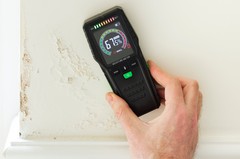
When the obvious checks come up empty, a few affordable tools can help you locate a leak without opening a single wall. A moisture meter, available at most hardware stores, measures dampness inside drywall and wood when you press it against the surface. By testing along a wall, you can trace rising moisture levels toward the wettest point, which usually sits closest to the leak.
An infrared thermometer or thermal camera is another excellent option because water changes the temperature of the materials around it. Cooler patches on an otherwise consistent wall or ceiling often reveal where moisture is spreading. Professionals use industrial-grade versions of these tools, but even a basic model can point you in the right direction. These methods are the heart of how to find a water leak in a house without creating new damage in the process. For leaks hidden under a slab or inside walls, acoustic listening devices can detect the faint sound of escaping water, though this usually calls for a trained technician.
When to Call a Professional
Some leaks are simply beyond the reach of homeowner tools, and that is nothing to be embarrassed about. If your meter confirms a leak but every visible fixture checks out, the source may be inside a wall cavity, beneath a concrete slab, or within your home's main supply line. Chasing these down without the right equipment often leads to unnecessary damage and wasted time.
This is where experienced help makes a difference. Our technicians use professional-grade moisture mapping, thermal imaging, and acoustic detection to locate leaks precisely, then address the resulting damage before it spreads. If you have already discovered standing water or soaked materials, prompt water damage restoration in Lansing prevents a bad situation from getting worse. We also serve homeowners who need mold remediation in Mason when a slow leak has gone unnoticed long enough to cause growth. We proudly support Lansing and the surrounding areas with fast, thorough service.
If you suspect an active emergency, such as water pouring in or a burst pipe, do not wait to investigate on your own. Our emergency damage restoration team is ready around the clock to stop the flow and protect your home.
Protecting Your Home for the Long Term
Finding a leak is only half the battle. Once you have located and repaired the source, keep an eye on the area for a few weeks to confirm the problem is truly solved. Routine habits make a lasting difference too. Check under sinks seasonally, test your toilets a couple of times a year, inspect appliance hoses, and keep your water heater on your maintenance radar. Small, consistent attention prevents the kind of slow leaks that cause the most expensive damage.
Knowing how to find a water leak in a house gives you real control over your home's health and your water bill. Most leaks can be traced using your meter, a careful walkthrough, and a few inexpensive tools, all without tearing into a single wall. When a leak hides deeper than you can reach, or when water has already caused damage, professional detection and cleanup keep the problem from spreading.
If you are dealing with a stubborn leak or lingering moisture anywhere in Lansing and neighboring communities, reach out to McCardel Restoration for a hand. We are glad to help you find the source, dry things out, and get your home back to normal.